


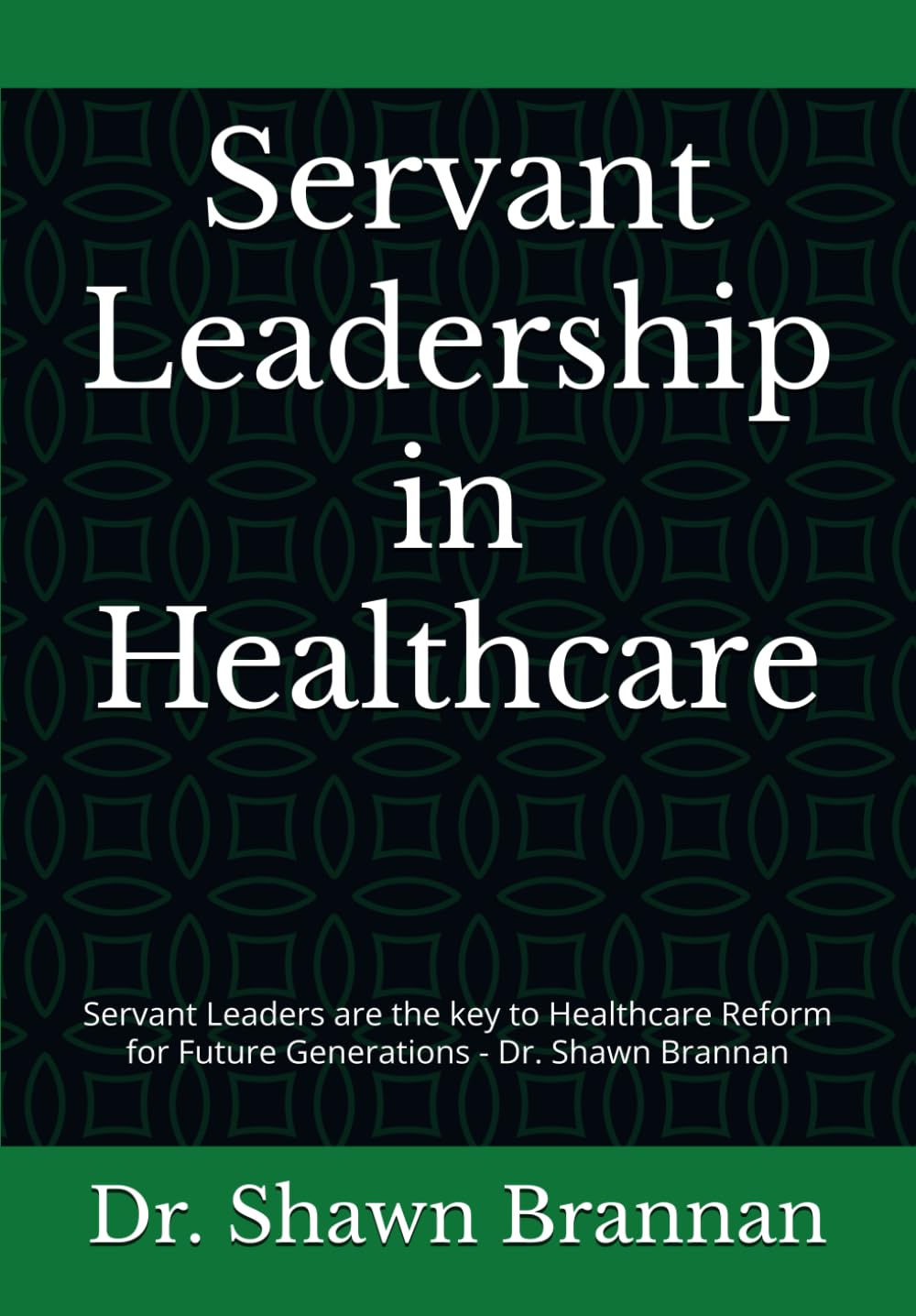
The Servant Leaders: Building High Performing Healthcare Organizations/Teams: “Servant Leaders are the key to Healthcare Reform for Future Generations” – Dr. Shawn Brannan
“Servant Leadership in Healthcare” explores the transformative approach of servant leadership and its profound implications for healthcare organizations. The book begins by defining servant leadership and its core principles, which include empathy, active listening, and stewardship. It emphasizes the importance of these principles in fostering a culture that prioritizes both employee and patient well-being. The book delves into the critical role of servant leadership in enhancing patient care, highlighting case studies that demonstrate improved patient outcomes when healthcare leaders adopt a servant-oriented mindset. It discusses strategies for building a culture of servant leadership within organizations, including the necessity of leadership commitment and buy-in. Training and development are presented as essential components for cultivating servant leaders. The book outlines effective training programs that focus on emotional intelligence, effective communication, and the practical application of servant leadership principles. Employee satisfaction is another key focus. The authors present evidence that servant leadership positively influences employee engagement and retention rates, creating a more motivated and committed workforce. The book discusses empowerment and autonomy, encouraging decision-making among team members and establishing feedback mechanisms that promote open communication. In the context of crisis management, the book examines how servant leadership principles can lead to effective responses during challenging times, particularly during the COVID-19 pandemic. It emphasizes the importance of empathy and collaboration in maintaining team morale and enhancing patient care during crises. Collaboration and teamwork are explored as fundamental elements of servant leadership, with strategies for fostering collaborative environments that enhance team dynamics. Recognition and rewards systems aligned with servant leadership values are also discussed, highlighting their role in reinforcing desired behaviors and outcomes.
Description
“Servant Leadership in Healthcare” explores the transformative approach of servant leadership and its profound implications for healthcare organizations. The book begins by defining servant leadership and its core principles, which include empathy, active listening, and stewardship. It emphasizes the importance of these principles in fostering a culture that prioritizes both employee and patient well-being. The book delves into the critical role of servant leadership in enhancing patient care, highlighting case studies that demonstrate improved patient outcomes when healthcare leaders adopt a servant-oriented mindset. It discusses strategies for building a culture of servant leadership within organizations, including the necessity of leadership commitment and buy-in. Training and development are presented as essential components for cultivating servant leaders. The book outlines effective training programs that focus on emotional intelligence, effective communication, and the practical application of servant leadership principles. Employee satisfaction is another key focus. The authors present evidence that servant leadership positively influences employee engagement and retention rates, creating a more motivated and committed workforce. The book discusses empowerment and autonomy, encouraging decision-making among team members and establishing feedback mechanisms that promote open communication. In the context of crisis management, the book examines how servant leadership principles can lead to effective responses during challenging times, particularly during the COVID-19 pandemic. It emphasizes the importance of empathy and collaboration in maintaining team morale and enhancing patient care during crises. Collaboration and teamwork are explored as fundamental elements of servant leadership, with strategies for fostering collaborative environments that enhance team dynamics. Recognition and rewards systems aligned with servant leadership values are also discussed, highlighting their role in reinforcing desired behaviors and outcomes.



Reviews
There are no reviews yet.